
 Stop Impulse Buying With a Wishlist
How to Stop Impulse Buying: Add It to a Wishlist Instead of Your Cart

The easiest way to stop impulse buying is to add the item to a private wishlist instead of your cart, come back to it later, and buy or share only what you still want. I have used this habit for years, in my own family and with my friends, and it is part of why I co-founded WishDeck. A wishlist sounds like a tool for wanting more. Used this way, it is a tool for spending less.
If you are new to wishlists, start with our guide on how to make a wishlist people actually use and the comparison of the best wishlist apps for iPhone and Android. This article is about something different: the habit, not the app.
Add-on magic: You can try the whole routine below in a free WishDeck wishlist: paste a link or a photo from any store, keep it private while you decide, and share one link when you are sure. Family can reserve a gift in secret, so nothing is bought twice.
Table of Contents
1. Sleep on it: the advice that started this post
2. Why I believe in the wishlist idea
3. The private wishlist method: add first, decide later
4. Why a wishlist is about spending less, not more
5. Private list first, public list later
6. The wish circle: wanted, received, tried and loved
7. One list for each person and each occasion
8. How parents use a wishlist with kids
9. Not only things: ideas and places
10. Why this is good for your friends and the planet
11. My year-round wishlist routine
12. Ready to Share Your Wishlist
13. Frequently Asked Questions
Sleep on it: the advice that started this post
Last week I was reading a magazine interview with a marketer and content creator about how she handles money. One of the questions was "Any tips to avoid spending impulses?" and her answer was simple: sleep on it. Urgency tactics work because they create false scarcity, she said, and she knew because she had used them in marketing herself. Get clear on what you really value, and let everything else wait.
I read it twice, because it describes exactly what a wishlist does when you use it well. It gives every wish a place to wait, and waiting is what kills an impulse. I do not count the hours. I just keep the wish where only I can see it until I know.
Why I believe in the wishlist idea
In my family we had the usual problem with gifts, and I never liked the question "what do you want?". I did not like how much time and energy everyone spent on that dilemma, on both sides. But I still wanted to give gifts, and I wanted them to be gifts people actually wanted. So I did what many of us do: I followed people, listened for hints, checked what they were looking at. Spying, basically.
At some point I thought it would be much easier if people simply wrote their wishes down in one place and let the rest of us see them. And there was a second reason. I am curious about people's wishes. Genuine wishes say a lot about a person, often more than a conversation does. A wishlist is a way to understand the people you love a little better. That is why I co-founded WishDeck, together with people who felt the same, and why the ideas below are things we live by, not features we invented.
The private wishlist method: add first, decide later
The private wishlist method is a simple rule: when you want something, you add it to a private wishlist instead of buying it, and you decide the next time you open the list. If you still want it, it stays and can move to your public list. If you do not, you delete it and the money stays in your pocket.
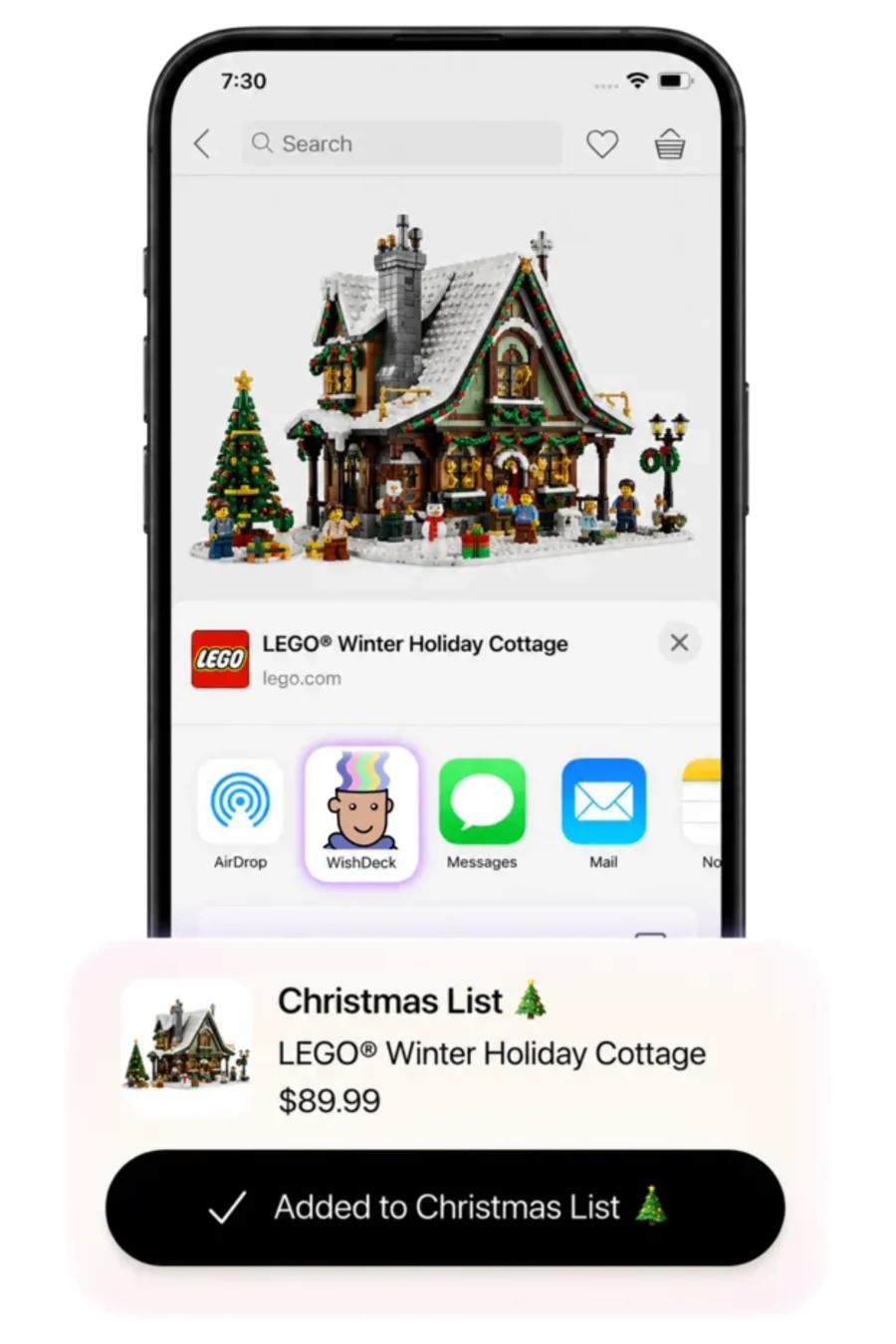
Here is the whole method, the way I do it.
Step 1. Capture, do not buy. In a store, take a photo. Online, share the link to your wishlist. On WishDeck the photo, price and store fill in by themselves, so it takes a few seconds.
Step 2. Keep it private. New wishes go to a private list that nobody sees. This is the waiting room.
Step 3. Come back later. Sometimes it is a few days, sometimes the next time I am planning a birthday. Ask one question: do I still want this, or did the store want me to want it?
Step 4. Delete or promote. Remove what has faded. Move what still matters to your public list.
Step 5. Share only the short list. Before a birthday or a holiday, send one link. Family and friends reserve what they will buy, and you get things you actually use.
The method works because the moment of desire and the moment of payment are separated. Stores spend a lot of effort to join those two moments together. A private wishlist pulls them apart again, and the length of the gap matters less than the fact that there is one.
Why a wishlist is about spending less, not more
Most people think a wishlist is a list of things to buy. I think of it as a list of things I decided not to buy yet. The difference matters. A cart pushes you towards checkout. A wishlist pushes you towards a decision.
My own private list proves it every month. I add something I spotted in a shop window or in a friend's story, and when I open the list again my first thought is often: this would have been a spontaneous purchase. I delete it. What survives a few of these checks is usually something I use for years.
That is why I believe a wishlist is one of the healthiest small habits you can build. It helps you understand what you really want, which is harder than it sounds. It protects your wallet, because you stop paying for the first version of a wish. And it saves time, because the list does the remembering for you.
Private list first, public list later
On WishDeck every account has private lists and public lists, and the order matters. Private is where I put everything: a jacket I saw in a store, a lamp from a hotel, a book someone mentioned. Public is where a wish goes only after it has survived a recheck.
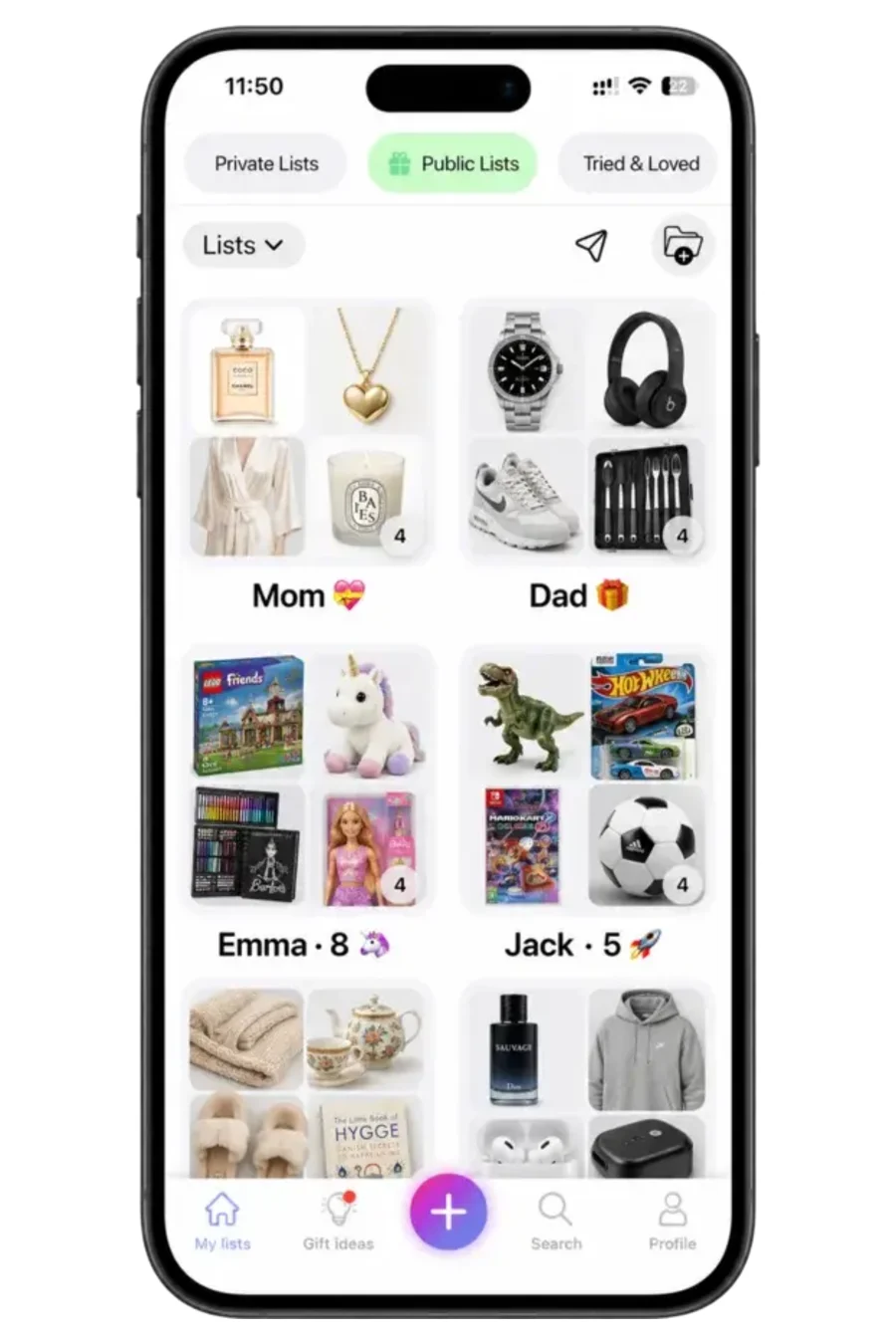
This split solves a problem many people have with wishlists. You do not want relatives to see every passing idea, so you add nothing, and then when someone asks what you want for your birthday you have no answer. With a private list you can add freely, because sharing is a separate step. You decide later what becomes public.
I also use my private list as a goal board. It holds things, but also ideas: read more, travel more, learn to make proper bread. Seeing those next to a pair of shoes is a good reminder of what I actually value.
The wish circle: wanted, received, tried and loved
The part of WishDeck I like most is what I call the wish circle. A wish starts on your list. Someone gives it to you, and you mark it as fulfilled. You use it for a while. If you love it, you move it from your wishlist to your Tried & Loved list, which is your personal recommendation shelf.
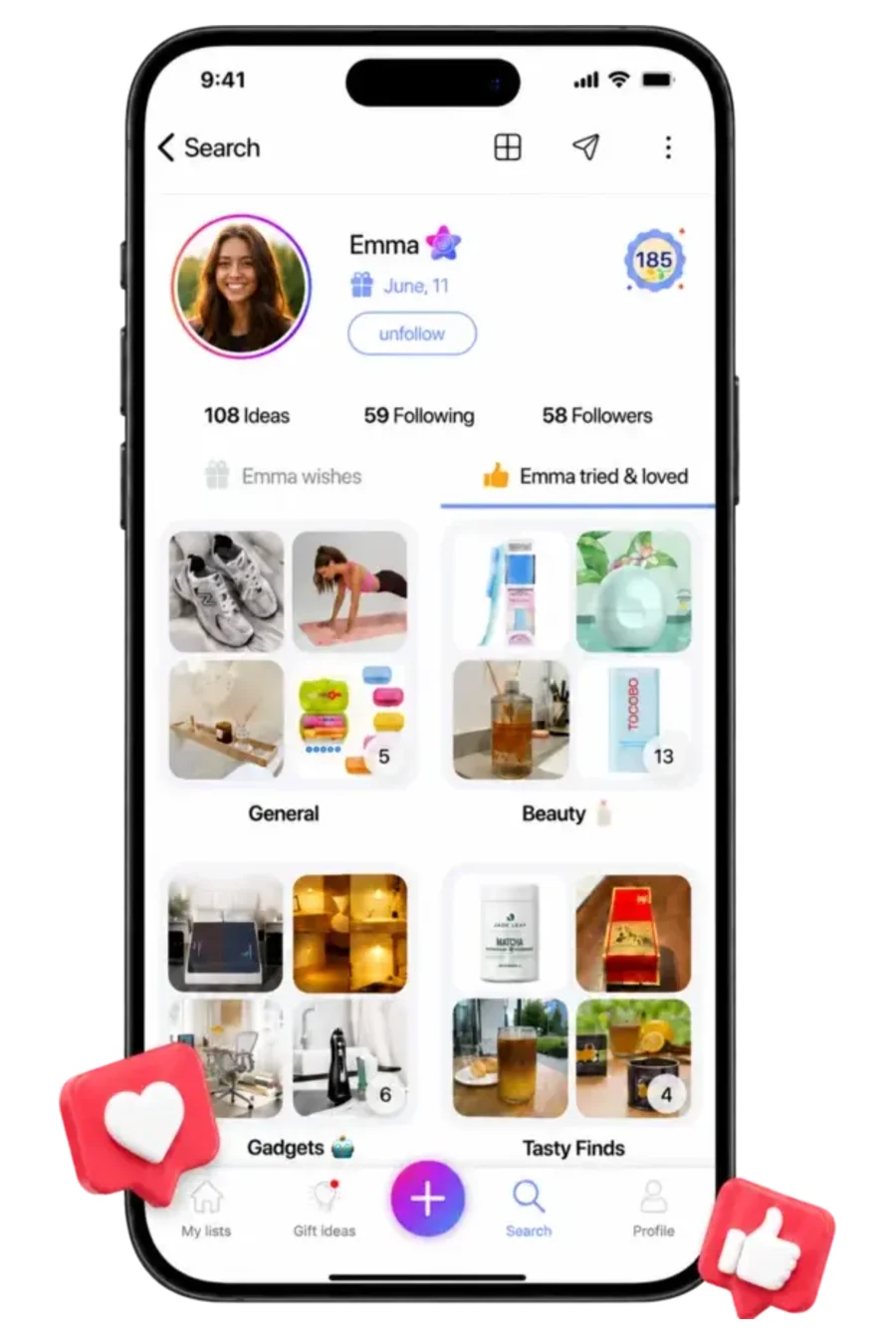
A clear example. In spring I added a ceramic matcha bowl and whisk set to my private list after trying matcha at a friend's place. When I opened the list a couple of weeks later I still wanted it, so I moved it to my public list. My sister reserved it for my birthday, so nobody else bought it. I used it almost every morning for two months, then moved it to Tried & Loved. A friend saw it there and asked which matcha brand to try and where to drink a really good matcha in town, and we ended up going to that coffee shop together.
That is the full circle: I wanted it, I received it, I used it, and now I recommend it. Everyone who follows me can see the whole story and ask questions in the comments. It is proof that the wish was real, which is worth more than any product review from a stranger. My Tried & Loved list also holds places I have visited and would send a friend to, which is my favorite kind of recommendation.
One list for each person and each occasion
A wishlist is not one long list. I keep separate lists for Christmas, for birthdays, for travel, and you can keep lists for other people too. If you are planning your child's birthday party, make a list for them: every toy they pointed at in a store, every "can I have this?" from the past months, every idea the grandparents mentioned. Share that one list with family and friends, and nobody has to ask you what to bring.
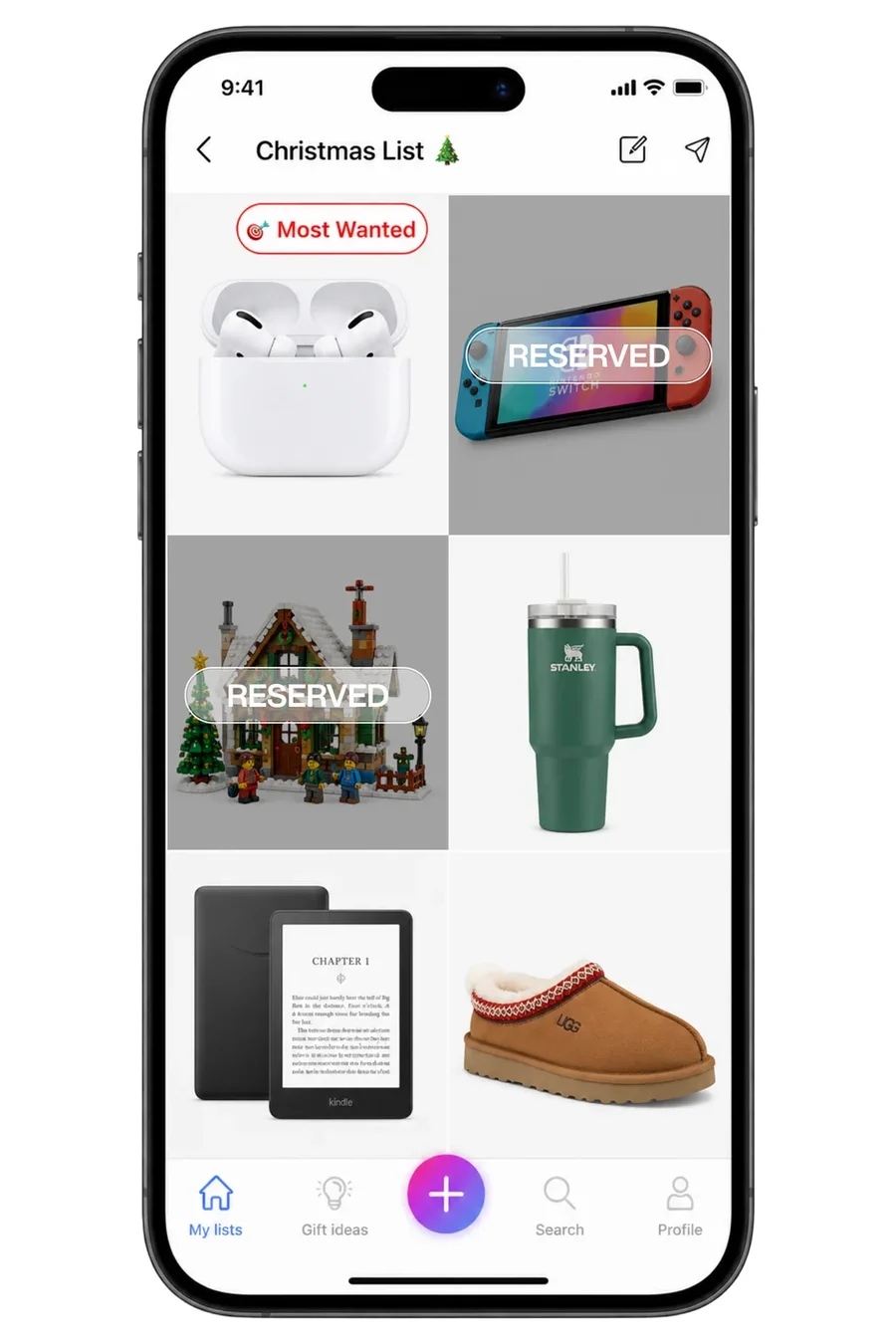
Reserving is what makes a shared list work. A relative opens the link, taps Reserve on the gift they will buy, and the owner of the list does not see who reserved what. Two aunts never buy the same mixer, and the surprise stays a surprise. This solves both halves of the gift problem at once: what to ask for, and what to give.
How parents use a wishlist with kids
Children ask for everything in a store. Many parents on WishDeck handle it the same way: instead of saying no, or saying yes and regretting it in the car, the child takes a photo of the toy and adds it to their own wishlist. Nothing is bought. Everyone goes home.
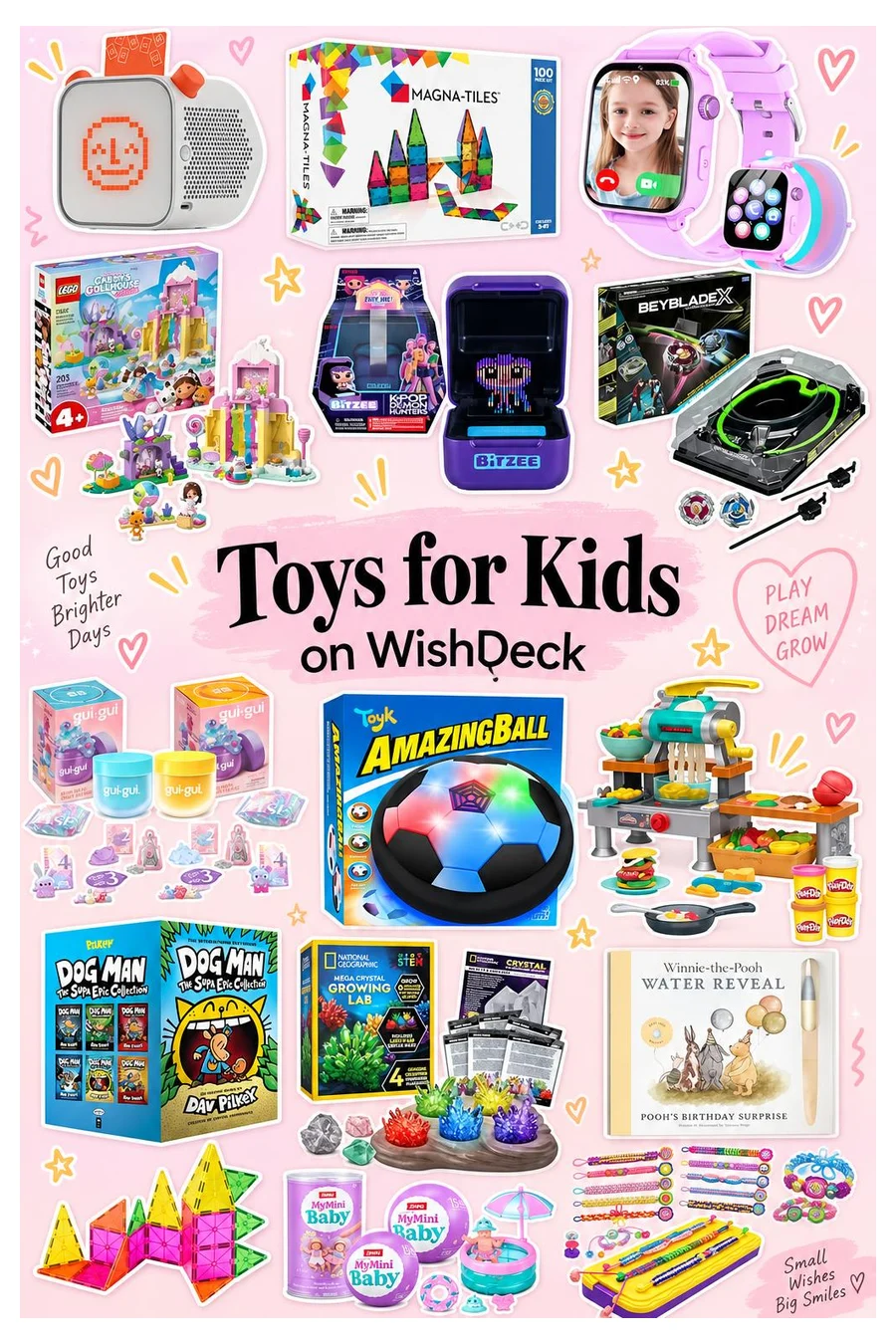
A few days later the child opens the list. Every time, something gets removed. Something new gets added. The things that stay are the things they still care about after the excitement of the shop has passed. Before a birthday the parents share the list with grandparents and friends, and the gifts that arrive are the ones the child chose with a calm head.
It is one of the best lessons about money a child can get. Not "we cannot afford it", but "let us see if you still want it next week". Children learn to wait, to compare, and to choose. And they learn that a wish that survives waiting is worth more than ten wishes made in a hurry.
Not only things: ideas and places
A wishlist can hold anything you want from life, not only products. Mine has places I want to visit, a course I want to take, and a few one-line ideas like "spend more weekends outside". They sit next to the physical wishes on purpose. When I scroll past a handbag and land on "travel more", the handbag often loses.
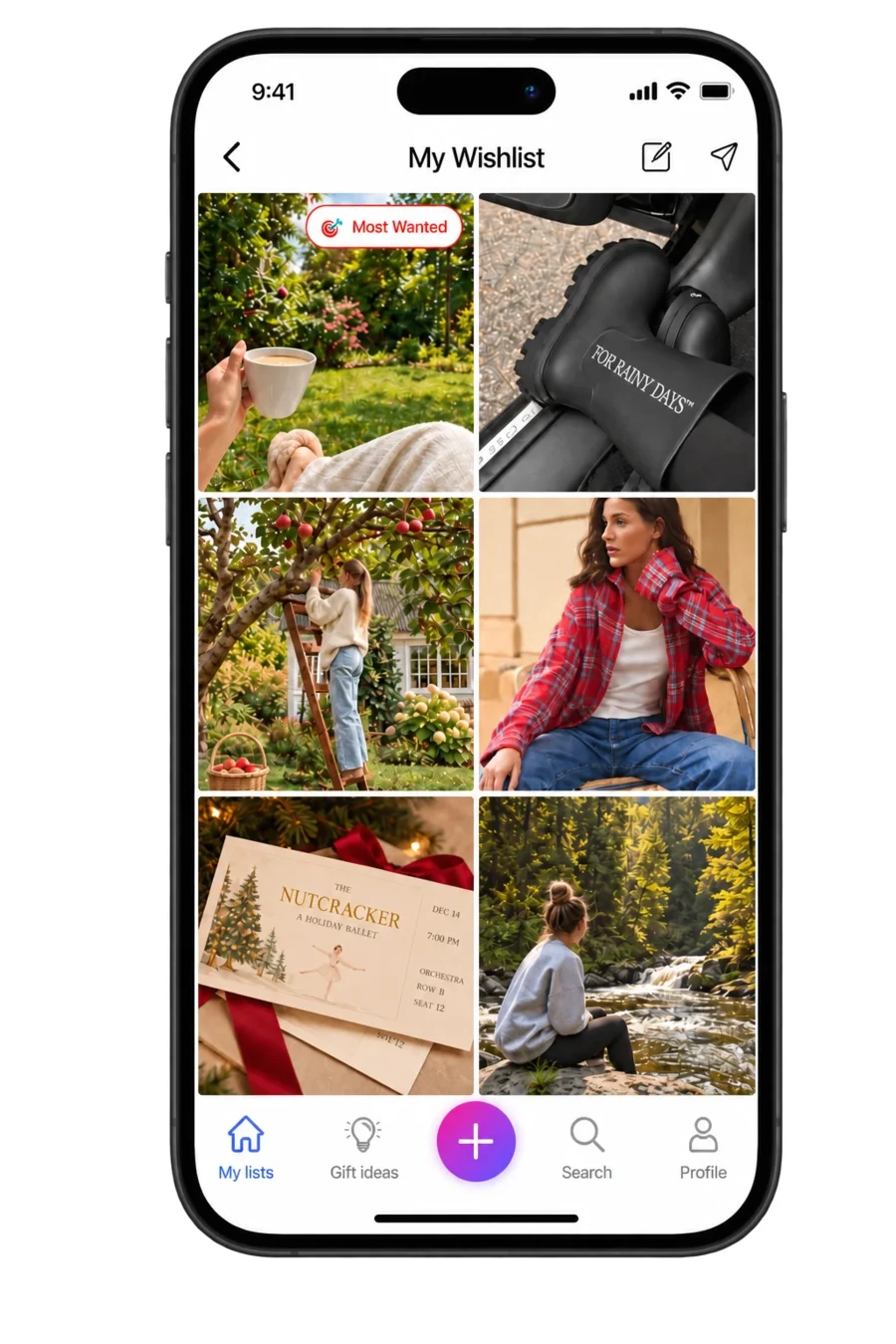
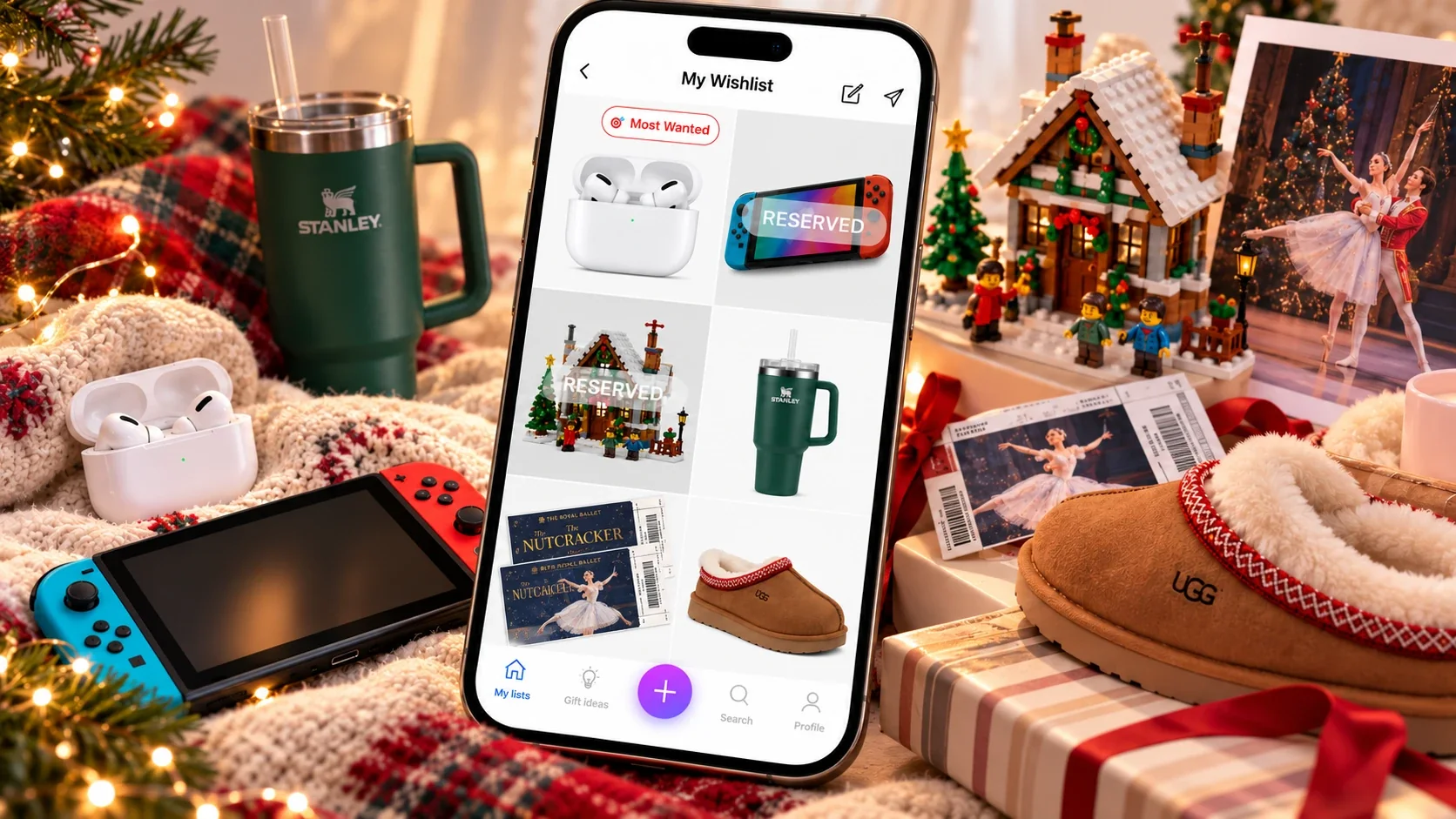
This is what such a list looks like. A slow morning coffee in the garden sits at the top as the most wanted wish. Next to it there are rain boots for rainy walks, an afternoon picking apples, a flannel shirt for autumn, tickets to The Nutcracker in December, and a simple note to go and sit by a stream, or simply to touch grass. Half of these cost nothing, and they are the wishes I come back to most.
When I have visited a place and loved it, it moves to Tried & Loved, the same way a product does. Friends who plan a trip can see where I have actually been and ask me about it. The list becomes a map of what I have wanted and what turned out to be worth it.
Why this is good for your friends and the planet
A wishlist used this way is good for the people around you, because you understand each other better. When friends share lists and comment on each other's wishes, you learn what someone really likes instead of guessing from a conversation six months ago. Gift-giving stops being stressful and starts being a small act of attention.
It is also good for the environment. A gift that was chosen by the person who receives it gets used. It is not returned, not re-gifted, not stored in a cupboard. Every impulse purchase that dies on a private list is one less thing produced, shipped and thrown away. Buying less, and buying right, is the simplest green habit there is.
And it is good for your wallet, obviously. You spend less on things you do not need, and the money goes to the few things you really wanted.
My year-round wishlist routine
The habit only works if the list lives all year, not only in December. This is my rhythm, and my family follows roughly the same one.
January. The holiday gifts are in. I mark them as fulfilled, delete what I no longer want, and the list is clean.
February. A few things for Valentine's Day go public. Everything else stays private and keeps waiting.
Spring and summer. I add what I spot: in shops, on holiday, in friends' stories. Most of it gets removed on the next check. Some of it moves to public before my birthday.
After the birthday. Received gifts are marked fulfilled. The ones I love move to Tried & Loved after I have used them for a while.
Autumn. The Christmas list grows from what survived the year. By December it is short, honest, and easy for family to shop from.
If you use a wishlist like this, you will spend less, waste less, and get gifts you actually use. That is the whole idea behind WishDeck, and I hope it helps your family the way it helps mine.
Ready to Share Your Wishlist
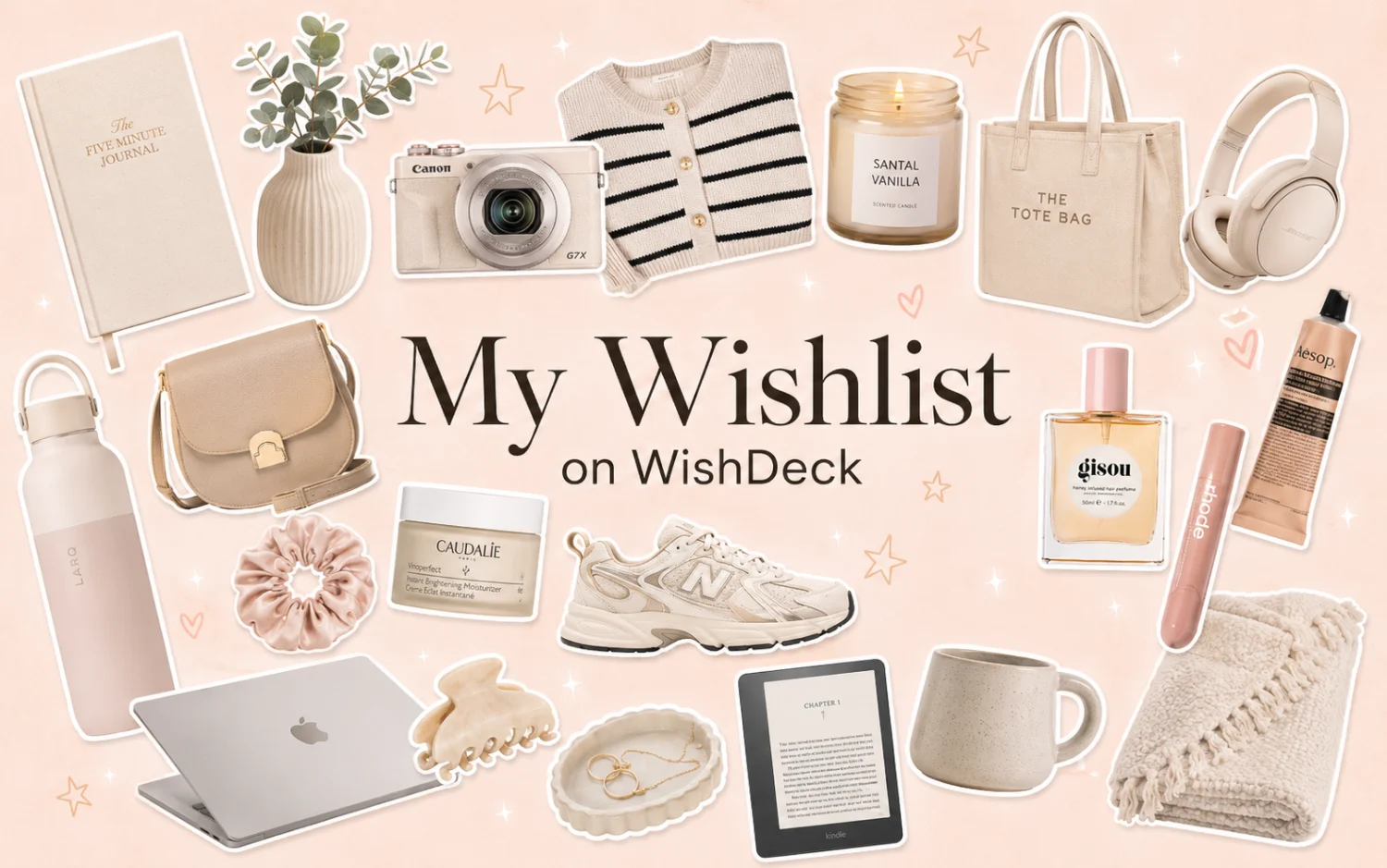
Start with one private list and add the next thing you want instead of buying it. A free WishDeck wishlist takes a photo or a link from any store, keeps it private while you decide, and gives you one link to share when a birthday or Christmas comes. Anyone can open the link on the web without an account, and family can reserve a gift in secret so nothing is bought twice. Want to see what a finished list looks like? Our guide to the aesthetic wishlist collage shows how people share theirs.
Frequently Asked Questions
Popular Reads
- How to Make a Wishlist That People Actually Use (2026 Guide)
- 10 Best Wishlist Apps & Websites (2026): iPhone, Android & Web, Tested
- Make and Share Your Aesthetic Wishlist: A New Way to Show What You Want
- Giftster vs Elfster vs WishDeck (2026): Which Family Gift List App Wins?
- Amazon Wish List Alternatives (2026): 7 Wishlist Apps That Work With Any Store
Looking for more insights? Explore related topics: How to Make a Wishlist, 10 Best Wishlist Apps (2026), Aesthetic Wishlist or find more on our Blog.