
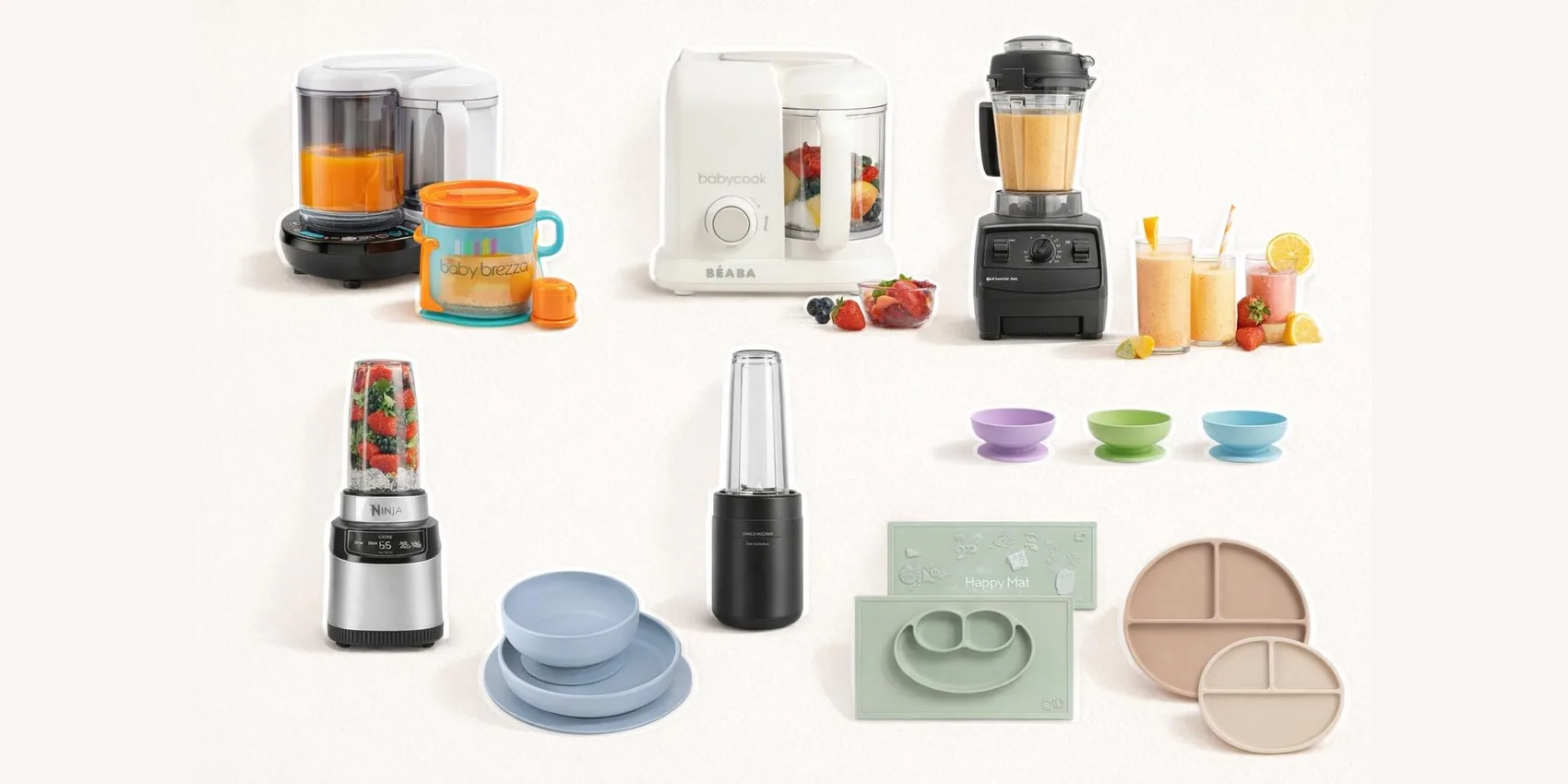
 Best Baby Feeding Gear for Starting Solids
Best Baby Feeding Gear for Starting Solids: Bowls, Spoons, Food Makers & Bibs
The best baby feeding gear for starting solids makes daily meals easier to prep, serve, and clean up — from spill-cutting suction bowls and soft-tip spoons to all-in-one baby food makers. This 2026 guide rounds up 20 picks across five sections — food makers and blenders, bowls and plates, spoons, storage and on-the-go, and bibs — ranging from about $8 budget basics to $200 prep appliances. Prices and stock were checked on September 14, 2026.
Pair these with the broader must-have baby gear checklist and, if counter and kitchen space is tight, our guide to high chairs for small spaces.
Add-on magic: Tap to save any pick to a WishDeck wishlist, compare the same product's price across Amazon, Walmart, and brand sites to grab the best deal, and share the list so family can reserve gifts without doubling up.
Table of Contents (2026)
2. Baby Food Makers & Puree Prep
3. Blenders for Small-Batch Baby Meals
4. Bowls, Plates & Suction Mats
7. Ready to Share Your Wishlist
Our Top 5 Picks
 Best Splurge
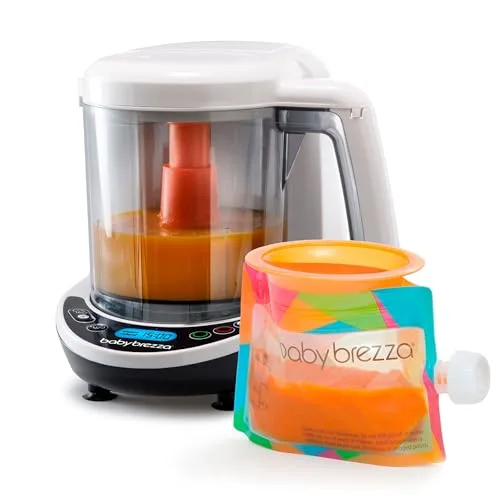
Baby Brezza One Step Baby Food Maker
Cooks and blends in one machine — the fastest path to smooth homemade purees.
$97.99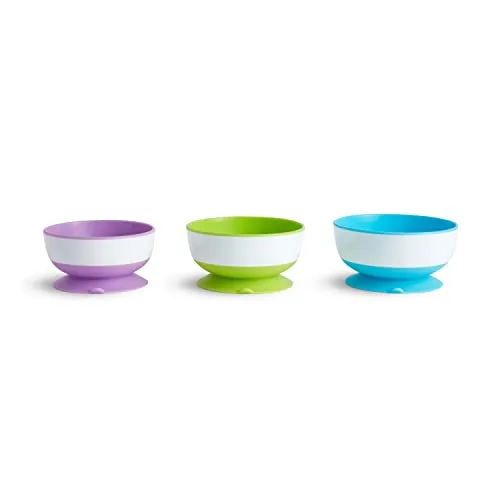 Best Budget
Munchkin Stay-Put Suction Bowl
A low-cost suction bowl that cuts down spills for early purees and soft foods.
$9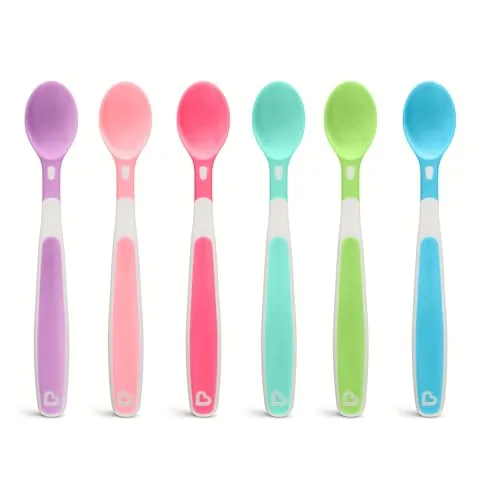 Best First Spoons
Munchkin Soft-Tip Infant Spoons (12-pack)
Gentle soft tips and a multipack make starting spoon-feeding low-stress.
$6.92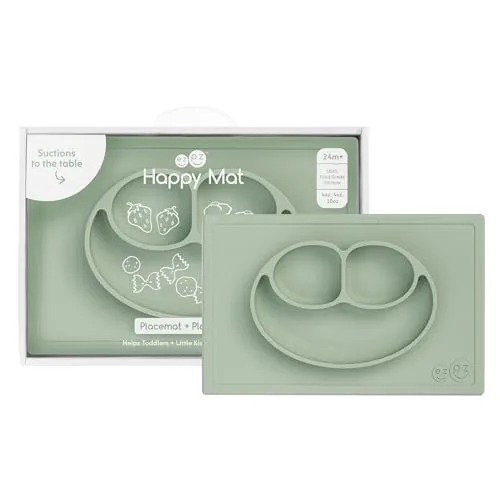 Best for BLW
ezpz Happy Mat Suction Placemat
One-piece mat-and-plate keeps food contained for self-feeding with fewer parts.
$26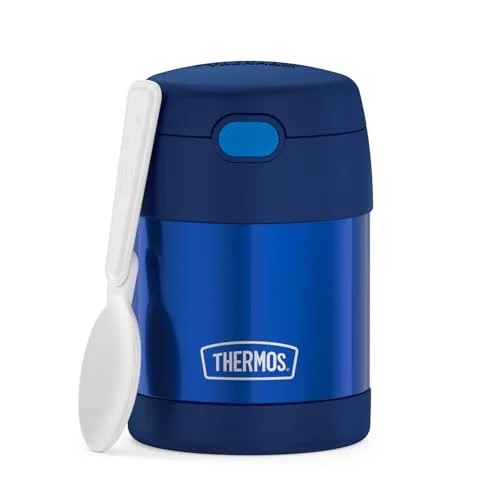 Best for Travel
Thermos Funtainer Food Jar (8 oz)
Insulated jar packs warm or cold meals for daycare and outings, no microwave needed.
$21Quick Picks at a Glance
Prices and stock were checked on September 14, 2026.
| Product | Price | Best for | Link |
|---|---|---|---|
| Baby Brezza One Step Baby Food Maker | $97.99 | Best Splurge | Shop |
| Munchkin Stay-Put Suction Bowl | $9 | Best Budget | Shop |
| Munchkin Soft-Tip Infant Spoons (12-pack) | $6.92 | Best First Spoons | Shop |
| ezpz Happy Mat Suction Placemat | $26 | Best for BLW | Shop |
| Thermos Funtainer Food Jar (8 oz) | $21 | Best for Travel | Shop |
Baby Food Makers & Puree Prep
For the "we're starting solids" moment, a cook-and-blend machine is the fastest path to consistent textures. These picks suit families who want homemade purees without turning meal prep into a second job.
1. Baby Brezza One Step Baby Food Maker



This is a cook-and-blend machine that turns simple ingredients into smooth purees with minimal transfers and mess. Reviewers often highlight the convenience of combining steps and the appeal of making fresh batches on a busy schedule. The most repeated tradeoffs are cleaning the parts thoroughly and the counter-space footprint. Best for families making purees several times a week because it streamlines the routine.
- Cook + blend workflow reduces extra pots and transfers
- Helpful for consistent puree texture when starting out
- Good “set it up and move on” convenience for busy days
- The most common complaint is that cleanup can feel fiddly with multiple parts
- Takes up noticeable counter space in smaller kitchens
- Not ideal if you only make baby food occasionally
2. Beaba Babycook Original 4-in-1 Steam Cooker Blender
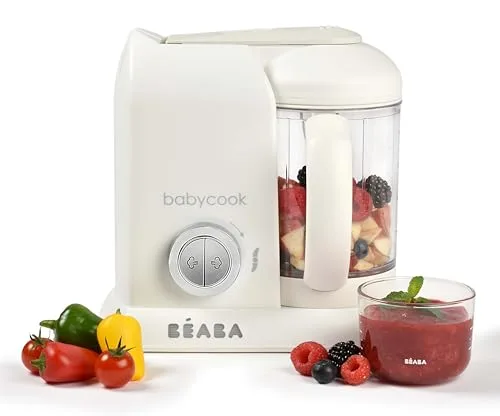
This steam-and-blend system is built for parents who want gentle cooking, easy purees, and the ability to transition textures as baby grows. Across buyer feedback, people praise the straightforward daily routine and the ability to make small portions without a full kitchen setup. The most common critiques focus on price and the need to stay on top of cleaning to avoid lingering odors. Best for caregivers who want a dedicated baby-food station because it keeps prep predictable.
- Steam cooking supports soft textures for early solids
- Designed for small portions without lots of extra tools
- Simple workflow that fits daily meal prep
- The most common complaint is the higher price compared with basic blenders
- Cleaning promptly matters to prevent smells or residue
- A single-batch approach may feel slow for bulk prep
Blenders for Small-Batch Baby Meals
If you'd rather buy a blender that grows beyond babyhood, these options handle purees, smoothies, and family sauces. They're great gifts for practical households that like multipurpose kitchen gear.
3. Vitamix Explorian E310 Blender (for baby purees)
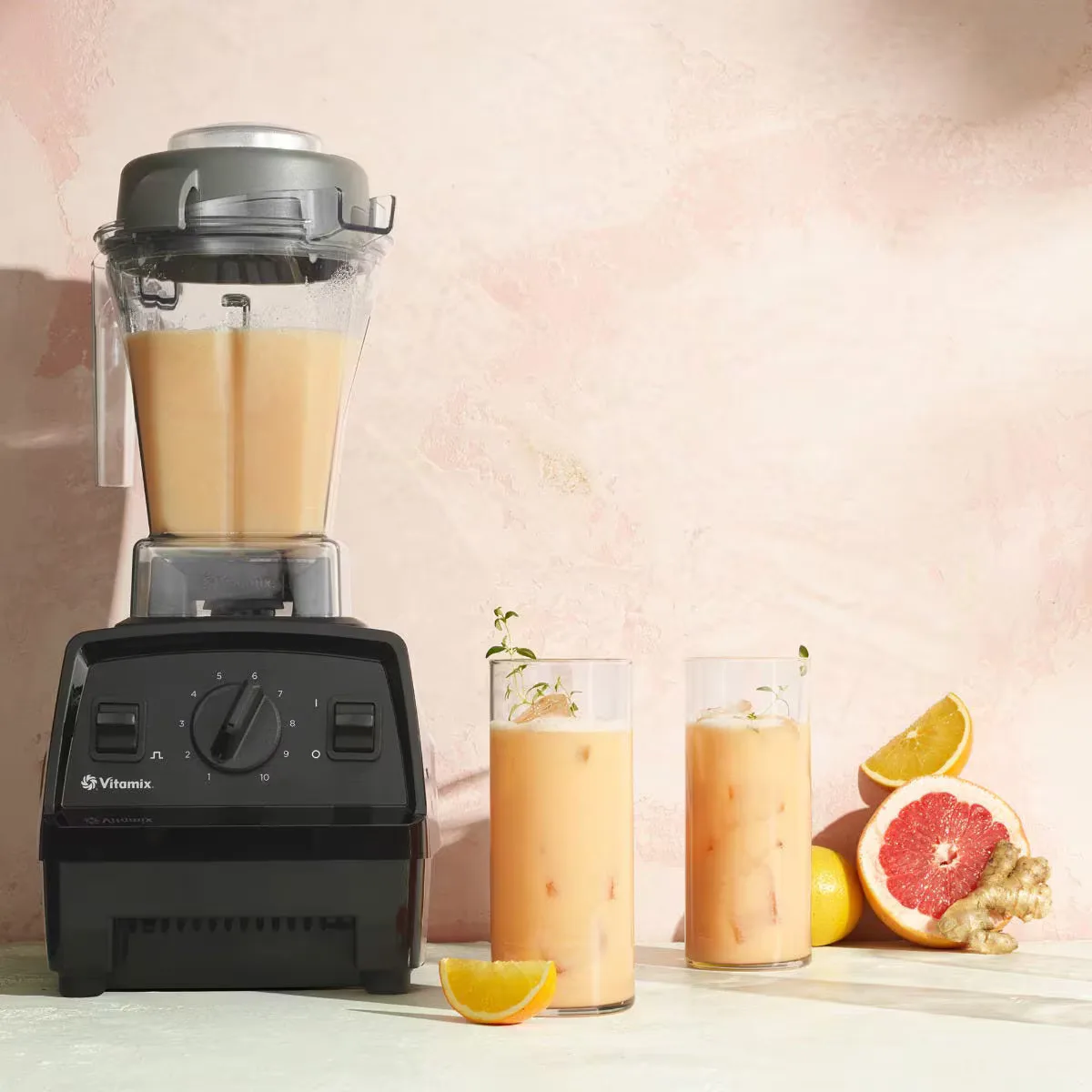


This is a full-size blender that takes baby purees from "first tastes" smooth to thicker blends that support texture learning. Across expert reviews and buyer comments, people consistently point to strong blending performance and a long-term kitchen role beyond baby food. The most common downside is cost, plus the fact that a full-size jar can feel oversized for tiny puree batches. Best for families who want one blender for baby and beyond because it's built for versatile everyday blending.
- Versatile for purees, sauces, soups, and smoothies long after baby
- Reviewers often highlight consistently smooth results
- A solid pick for households that cook frequently
- The most common complaint is the price compared with baby-only appliances
- Full-size jar can be awkward for very small batches
- Louder than some compact personal blenders
4. Ninja Nutri Pro Blender (for baby food prep)
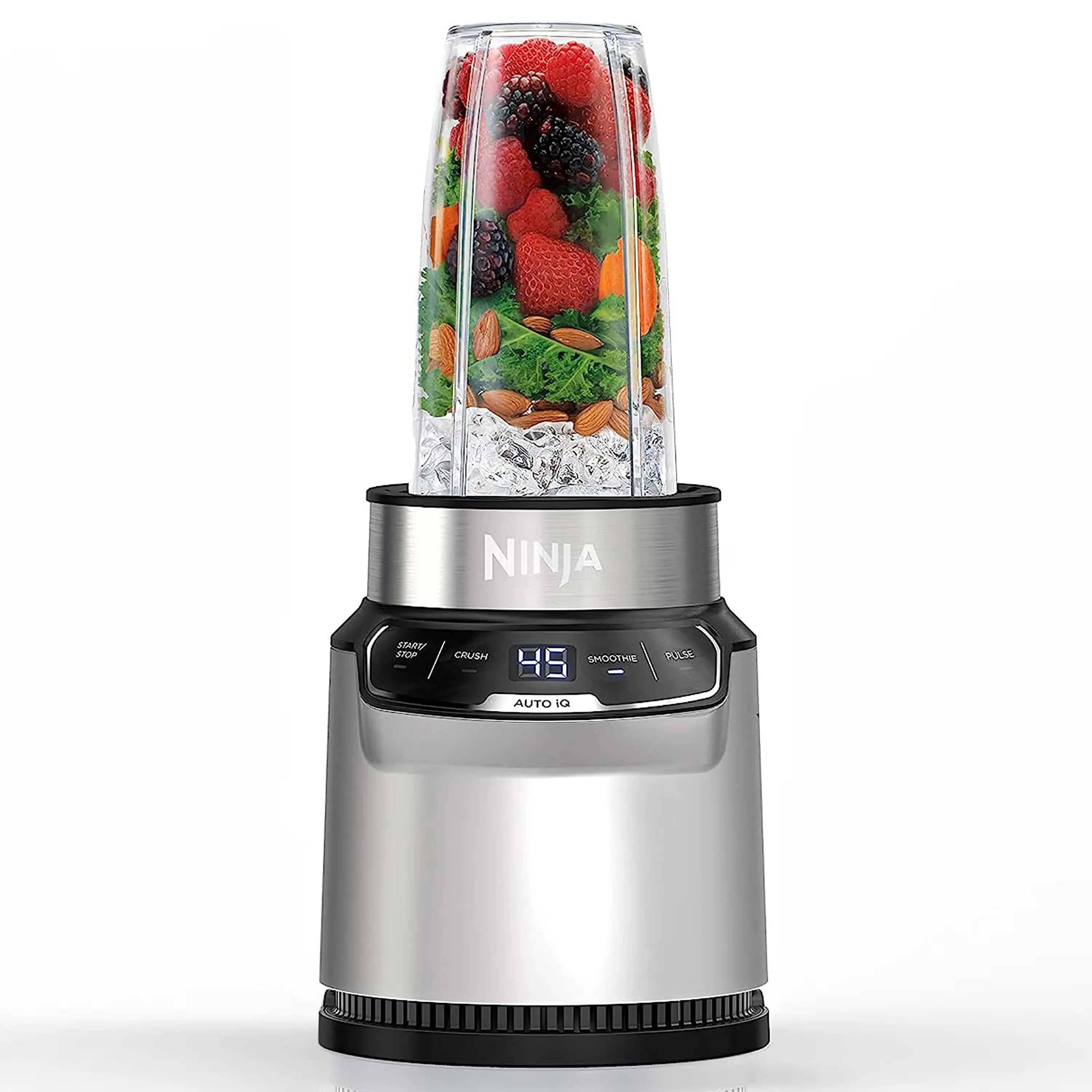

This compact blender is aimed at parents who want quick purees, simple smoothies, and small-batch prep without hauling out a big appliance. Buyers frequently mention the convenience of blending directly in personal-size cups and the overall speed for everyday use. The most common critique is noise, and some reviewers note that thicker blends may require extra shaking or scraping. Best for busy caregivers because it makes small servings fast with minimal setup.
- Compact footprint and quick setup for daily use
- Personal-size blending suits small puree portions
- Convenient for caregivers who also make smoothies
- The most common complaint is that it's loud
- Thicker purees can need pausing and scraping
- Not as versatile as a full-size blender for big recipes
5. KitchenAid Compact Power Plus Blender (for small-batch purees)
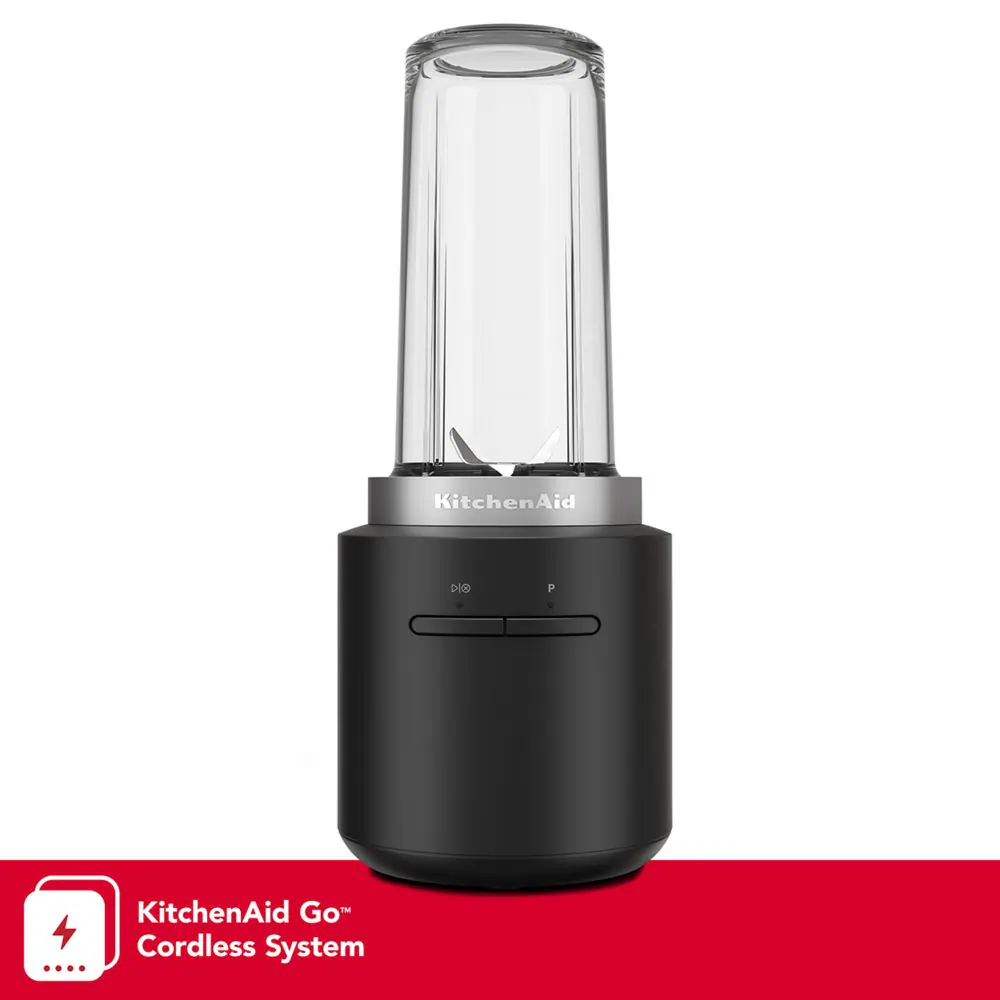

This compact blender is a nice middle ground for families who want smoother purees and sauces without committing to a large, heavy base. Reviewers often describe it as a solid everyday blender for smaller kitchens, and buyers tend to like the balance of capability and footprint. The most common drawback is that compact blenders can still struggle with very thick mixes unless you add liquid or blend in stages. Best for small kitchens because it supports baby-food prep without taking over the counter.
- Compact size suits apartments and crowded counters
- Useful beyond baby: sauces, dips, smoothies
- Good choice for small-batch blending routines
- The most common complaint is difficulty with very thick blends without extra liquid
- Not as powerful-feeling as premium full-size blenders
- Capacity can be limiting for family-sized recipes
Bowls, Plates & Suction Mats
Suction gear won't stop every toss, but it cuts down on spills and keeps meals calmer. These are great practical gifts — especially for households starting baby-led weaning or self-feeding practice.
6. Munchkin Stay-Put Suction Bowl

This is a simple suction bowl for early solids — ideal for parents who want a low-cost upgrade from regular dishes. Buyers consistently describe it as an easy starter bowl for purees and soft foods, especially when paired with a smooth highchair tray. The most common complaint is that suction strength depends heavily on the surface, since texture and moisture can make it pop off. Best for budget-friendly setups because it's an easy add-on that helps reduce spills.
- Affordable way to try suction feeding gear
- Good size for early portions and purees
- Easy to keep a few in rotation
- The most common complaint is inconsistent suction on textured or curved trays
- Can stain with strongly colored foods over time
- Not the most “toddler-proof” for determined pullers
7. OXO Tot Suction Bowl with Lid
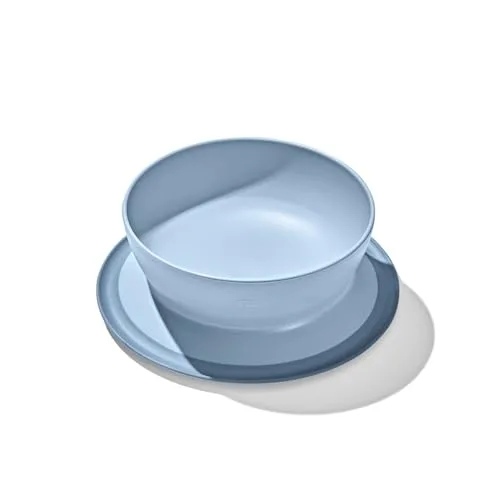
This suction bowl adds a lid for parents who want to save leftovers or pre-portion meals ahead of time. Reviewers often note the practicality of going from table to fridge, and buyers like having fewer containers to manage during a busy week. The most common complaint is that suction can be hit-or-miss on certain surfaces, especially if the tray isn't perfectly smooth and clean. Best for meal preppers because the lid makes leftovers and packing simpler.
- Lid makes storing leftovers and pre-portioning easier
- Suction base helps reduce sliding during self-feeding
- Good everyday size for purees and soft finger foods
- The most common complaint is variable suction depending on the tray surface
- Lid fit can feel snug for some users
- Not a guarantee against a determined toddler pull
8. ezpz Happy Mat Silicone Suction Placemat
This is a one-piece mat-and-plate setup for families who want fewer parts to chase during meals, especially when starting self-feeding. Buyers frequently mention that the all-in-one design helps keep food contained and makes serving multiple foods feel simpler. The most common complaint is that suction can fail on textured trays or if the surface isn't fully clean and dry. Best for baby-led-weaning households because the compartments and mat format encourage independent eating with less mess.
- All-in-one mat + plate reduces sliding and clutter
- Compartments help separate foods for early exposure
- Easy to set down and serve quickly
- The most common complaint is weaker suction on textured or curved surfaces
- Silicone can hold onto soap/food smells if not rinsed well
- Takes up more tray space than a small bowl
9. Skip Hop Silicone Divided Plate for Toddlers
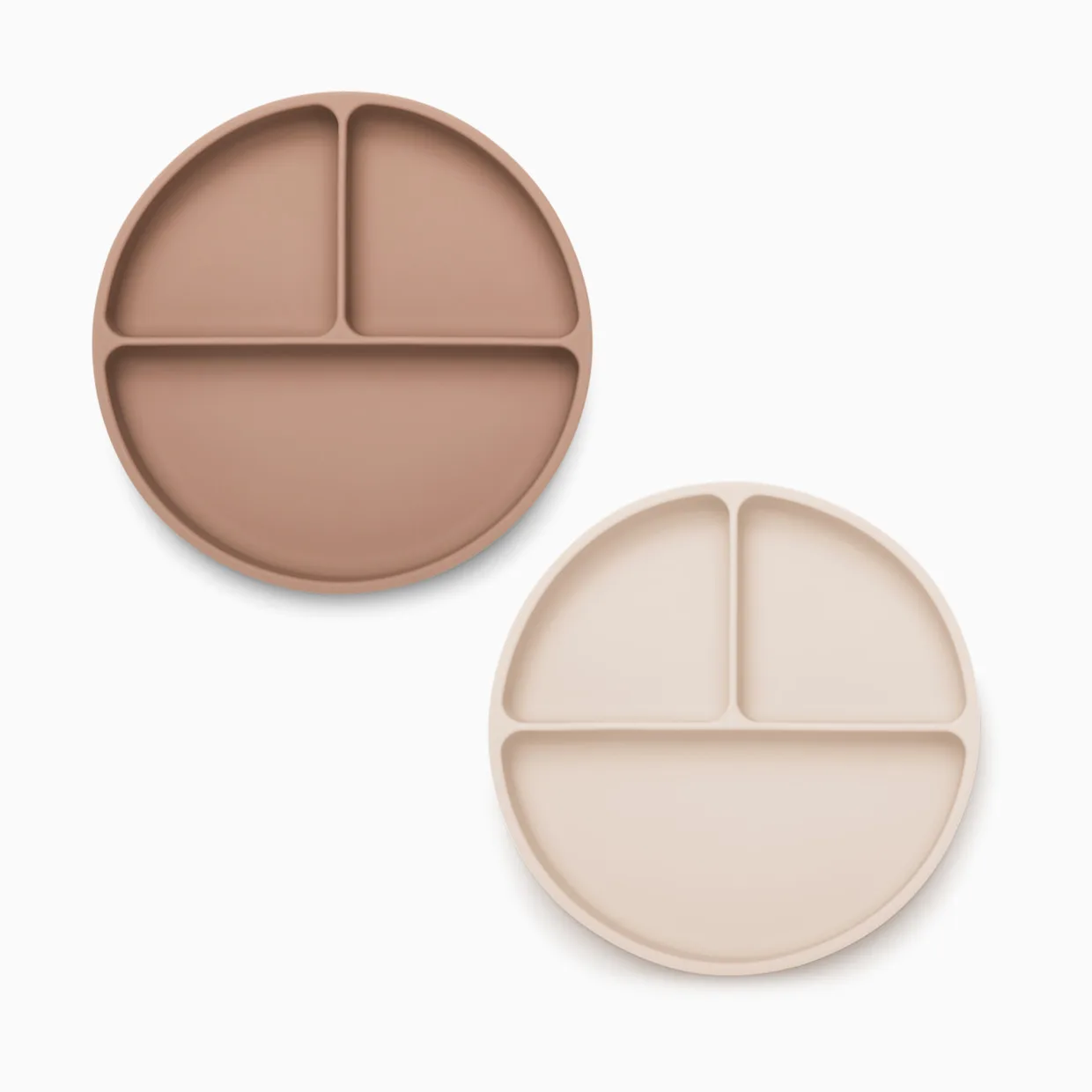
This divided silicone plate is geared toward the later stage of solids, when toddlers want "real food" variety and you want calmer portions. Buyers often describe it as a helpful way to separate textures and dips while supporting self-feeding at the table or highchair. The most common complaint with silicone plates is that suction can vary by surface, and some toddlers still manage to peel it up. Best for picky-phase toddlers because divided sections make variety feel approachable.
- Divided sections help keep foods separated and easy to grab
- Silicone is handy for everyday drops and bumps
- Works well as kids move beyond purees
- The most common complaint is inconsistent suction depending on the surface
- Silicone can attract lint/dust between washes
- Not ideal if you prefer rigid plates with higher walls
10. Freshly Picked Silicone Suction Baby Bowl
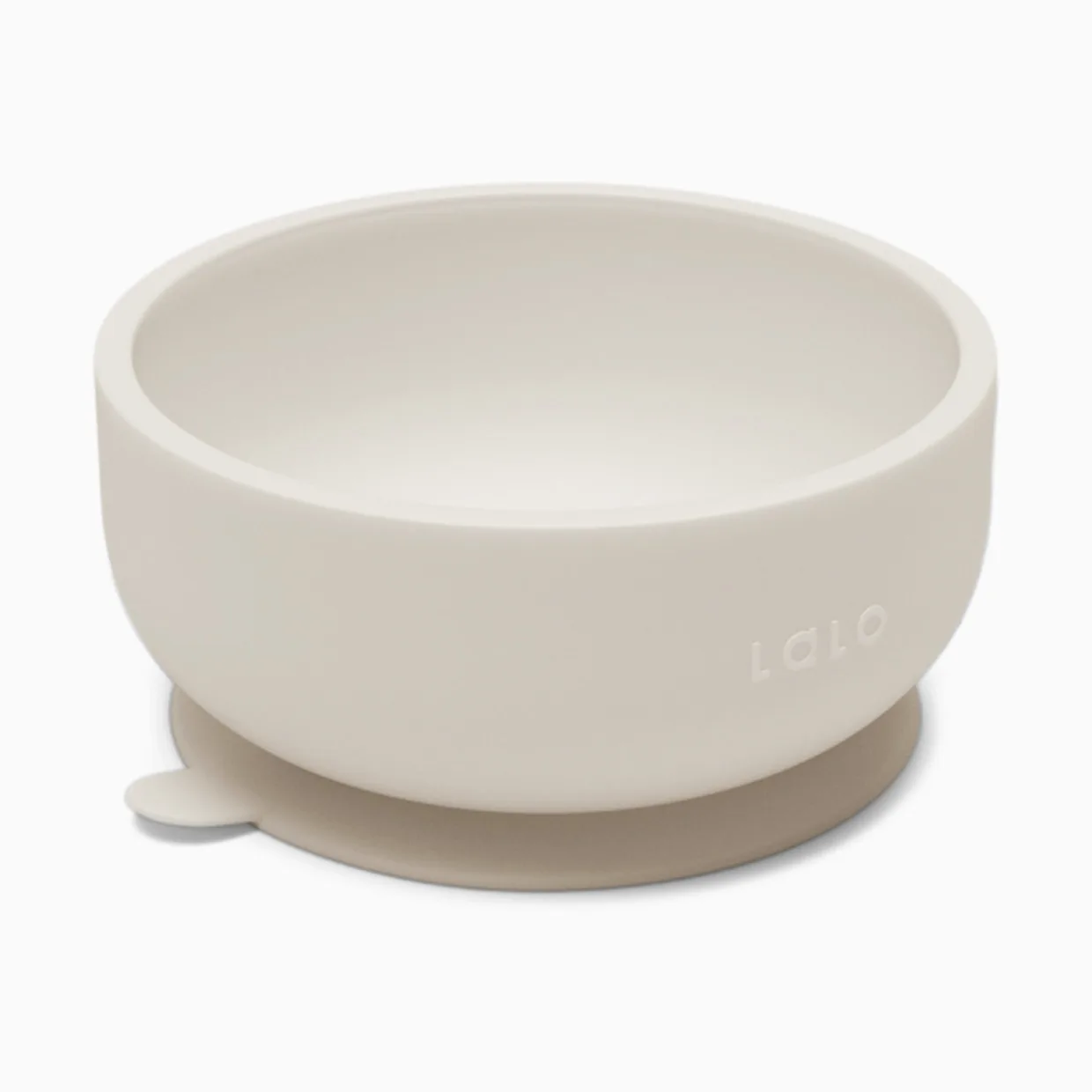
This suction bowl is a style-forward, everyday bowl for parents who want a cleaner look on the highchair without giving up practicality. Buyers often mention that it feels like a nice giftable upgrade and works well for oatmeal, yogurt, and soft foods as baby practices scooping. The most common complaint is that, like many suction bowls, performance depends on a smooth, clean tray — textured surfaces can reduce stick. Best for gift-givers because it looks elevated while still being functional for daily meals.
- Giftable look that still fits daily feeding
- Good shape for oatmeal, yogurt, and thicker purees
- Suction base helps reduce sliding during early scooping
- The most common complaint is suction not holding well on textured trays
- Silicone may pick up odors if not rinsed thoroughly
- Some parents prefer a lid for storage (not included here)
11. Innobaby Divided Silicone Suction Plate
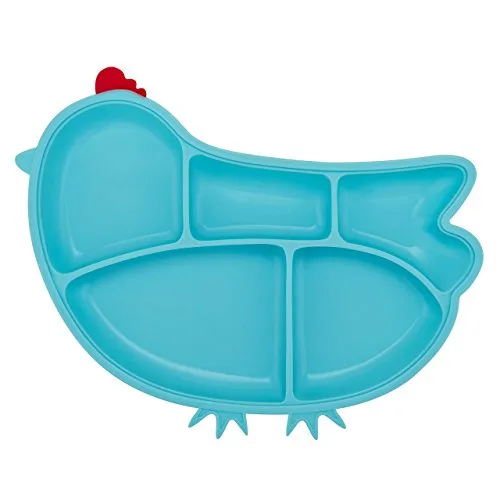
This divided suction plate is made for babies and toddlers who do better when foods are separated — think fruit in one section, protein in another, and a dip zone. Reviewers often note the fun shape and the practicality of compartments for baby-led weaning and toddler meals. The most common complaint is, again, suction: it can be strong on smooth surfaces but less reliable on textured trays. Best for variety eaters because the compartments make mix-and-match meals easy.
- Divided sections support variety and portioning
- Silicone is drop-friendly for everyday use
- Fun design that can encourage interest at the table
- The most common complaint is suction inconsistency on textured or curved surfaces
- Silicone can hold onto strong food smells if not rinsed well
- Takes more space than a compact bowl
Spoons for First Bites
Early spoons should be gentle on gums and easy for adults (and eventually babies) to control. These picks cover classic soft tips, training-friendly shapes, and a more elevated option for long-term use.
12. Munchkin Soft-Tip Infant Spoons (12-pack)
These soft-tip spoons are a go-to starter for caregivers feeding purees and thin cereals to beginners. Buyers consistently mention that the tips feel gentle and the 12-pack makes it easy to keep clean spoons in rotation at home and in the diaper bag. The most common complaint is that soft tips can show wear over time, especially if chewed. Best for first-time parents because it's a simple, low-stress way to start spoon-feeding.
- Soft tips feel gentle for early feeding
- Multipack is convenient for daily rotation
- Easy to toss in a diaper bag for on-the-go meals
- The most common complaint is that the soft tips can get chewed or worn
- May stain with foods like carrots or tomato sauce
- Not ideal for thicker toddler foods that need a firmer spoon
13. Gerber Graduates Stage 1 Spoons (4-pack)
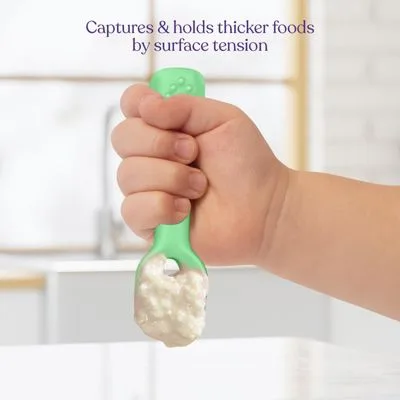
These Stage 1 spoons are designed for the very beginning of solids, when small bites and gentle edges matter most. Buyers often describe them as easy to use for parent-led feeding and practical to keep around as backups. The most common complaint is that sets like this can feel a bit basic, and some parents prefer a longer handle for deeper jars. Best for minimalist registries because they cover the essentials without overcomplicating the drawer.
- Beginner-friendly shape for early puree feeding
- Simple, practical set for everyday rotation
- Good backup option for travel or daycare bags
- The most common complaint is that the design can feel basic compared with premium options
- Some caregivers prefer longer handles for deeper containers
- May show staining with brightly colored purees
14. Beaba Stainless Steel Baby Spoon Set
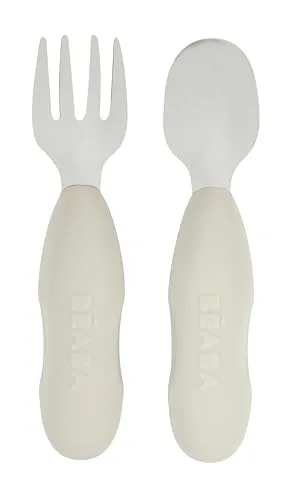
This stainless steel spoon set is for families who prefer a more "real cutlery" feel while still keeping baby-friendly proportions. Reviewers often point out the elevated look and the long-term usability as babies grow into toddlers who want to imitate adults. The most common complaint is that metal can feel less forgiving than silicone for very early, sensitive-gum stages, depending on the baby. Best for style-minded households because it blends into the grown-up kitchen while still being kid-appropriate.
- Elevated look that feels like real cutlery
- Can transition well from baby to toddler use
- Easy to match with other mealtime sets
- The most common complaint is that metal can feel less gentle than silicone for brand-new eaters
- Less “grippy” than thicker silicone handles for some caregivers
- Not ideal if you want a chew-safe training spoon
15. Nuby First Spoons Soft-Tip Training Spoons (3-pack)
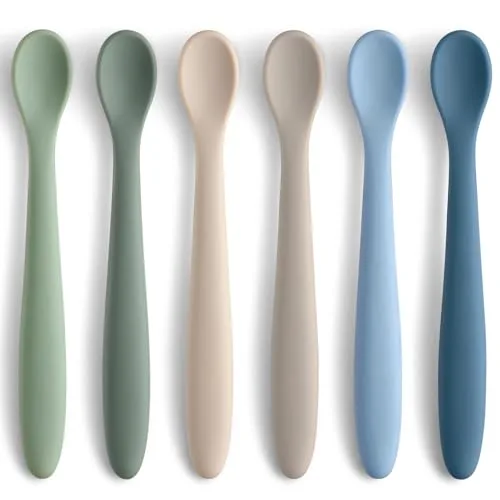
These soft-tip training spoons are aimed at early self-feeding, when babies want to grab and explore but still need a gentle mouth feel. Buyers often report they're easy to hold and helpful for practicing with thicker purees and soft foods. The most common complaint is durability — soft tips can get chewed up over time if your little one treats the spoon like a teether. Best for self-feeding practice because the training-friendly shape encourages independence from the start.
- Soft tip supports gentle early bites
- Training-friendly for babies learning to hold utensils
- Good for practicing thicker purees and soft foods
- The most common complaint is that the soft tip may wear if chewed
- Can stain with brightly colored foods
- Some parents prefer longer handles for parent-led feeding
Storage, On-the-Go & Bibs
Solids get easier when you can batch-prep, freeze, and pack meals without leaks — and when a good bib catches what little hands drop. These picks help you build a simple system: make it once, portion it, pack it, and keep cleanup manageable.
16. Thermos Funtainer Stainless Steel Food Jar (8 oz)

This insulated food jar is for parents packing daycare lunches or outings where you want warm (or cold) food without relying on a microwave. Buyers consistently mention it's handy for things like pasta, oatmeal, and yogurt, and many like having a dedicated kid-friendly container for routines. The most common complaint is that cleaning around the lid and seals can take extra attention to prevent lingering smells. Best for daycare and travel because it makes real meals easier to pack.
- Great for packing warm or cold meals on the go
- Kid-friendly size for daycare lunches and outings
- Durable stainless steel feel for daily routines
- The most common complaint is that the lid/seal areas need thorough cleaning to avoid odors
- Bulkier than a simple plastic container
- Not ideal for very thin liquids if you prefer a leak-proof soup container
17. Stasher Silicone Reusable Food Storage Bag (quart)
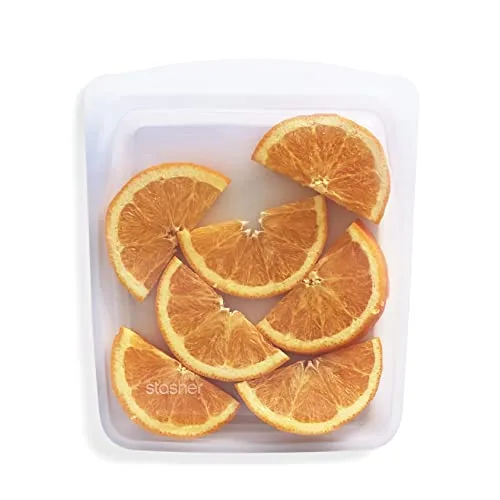
This reusable silicone bag is a flexible catch-all for snacks, cut fruit, steam-in-bag veggies, or storing prepped ingredients for baby meals. Buyers consistently report that it's convenient for reducing disposable bags and helpful for packing on the go. The most common complaint is that fully cleaning and drying the corners can take extra effort compared with rigid containers. Best for eco-leaning families because it replaces a lot of single-use storage in one swap.
- Reusable option that reduces disposable bag waste
- Handy for snacks, ingredients, and leftovers
- Good for on-the-go packing and fridge organization
- The most common complaint is that cleaning/drying the corners can be a bit annoying
- Can feel pricey compared with basic bags
- Not as rigid as a container for stacking in tight fridges
18. Wean Green Baby Food Freezer Tray (silicone)
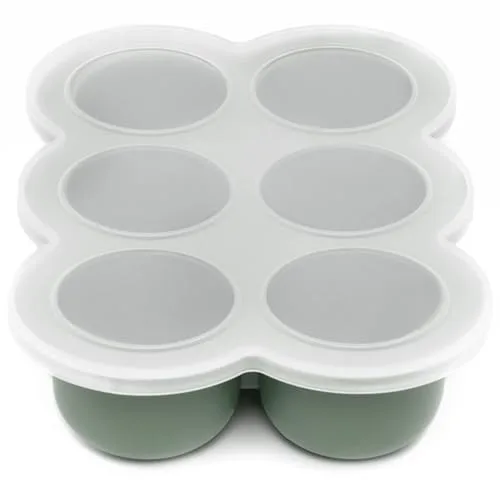
This silicone freezer tray is for parents who want to portion homemade purees (or sauces, oatmeal, and smoothie packs) into grab-and-go servings. Buyers often mention that it simplifies batch cooking days and makes it easier to thaw only what you need. The most common complaint is that silicone trays can be tricky to keep perfectly odor-free if they aren't cleaned and dried thoroughly. Best for batch cookers because it turns one prep session into multiple future meals.
- Makes portioning and freezing homemade purees straightforward
- Helpful for planning ahead and reducing daily prep
- Flexible silicone can make releasing portions easier than rigid trays
- The most common complaint is that silicone can retain odors if not cleaned well
- Spills can happen when moving a filled tray to the freezer
- Portion shape may not fit every storage container style
19. Baby Brezza Glass Baby Food Storage Jars (4-pack)
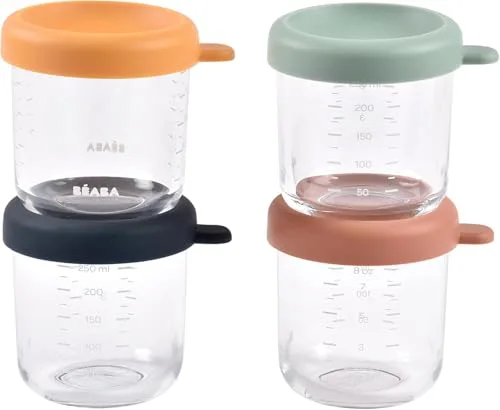
These glass storage jars are for families who want a sturdier, reusable way to portion purees, yogurt, and small meals in the fridge. Buyers often mention that glass feels less prone to retaining smells and can be a nice option for rotating a few days of food at a time. The most common complaint is weight and breakability — glass travels differently than plastic, especially in a diaper bag. Best for home meal prep because glass keeps flavors cleaner and portions organized.
- Glass helps resist lingering odors from strong foods
- Useful for portioning fridge meals and leftovers
- Feels like an upgrade from disposable containers
- The most common complaint is that glass is heavier and can break if dropped
- Not as travel-friendly as lightweight plastic
- Limited set size if you prep many portions at once
20. Babylist Silicone Bib with Crumb Catcher
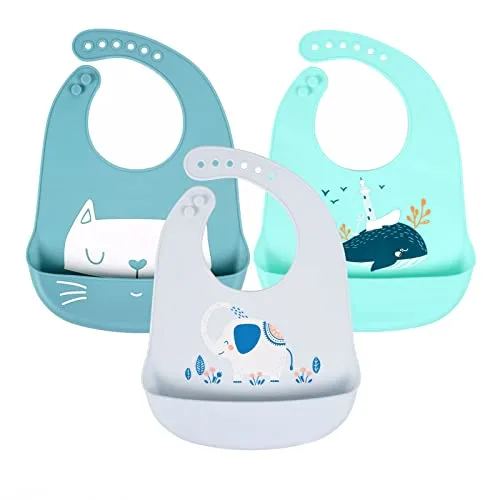
This silicone bib is for babies starting messy purees and finger foods, especially if you want an easy rinse-and-repeat solution. Buyers frequently report that the crumb catcher actually helps and that silicone wipes down faster than fabric bibs. The most common complaint is fit — some parents find silicone bibs can feel stiff or awkward on smaller babies until they grow into them. Best for messy milestones because it cuts down on outfit changes and keeps cleanup simple.
- Crumb catcher helps contain dropped food during early self-feeding
- Wipes clean quickly compared with fabric bibs
- Good everyday staple for purees and finger foods
- The most common complaint is that silicone bibs can feel stiff or bulky on smaller babies
- Food can get trapped in creases and needs a thorough rinse
- Some babies dislike the feel at first and need a short adjustment period
Ready to Share Your Wishlist
Starting solids comes with a surprisingly long shopping list, so make it easy to coordinate. Add any pick from this guide to a WishDeck wishlist in one tap, then organize items into folders like Starting Solids, Daycare Lunch, or Travel Mealtime. Share your list with friends and family so they can reserve items, which keeps everyone from buying the same bowl twice. Save colors, sizes, and "must-have vs. nice-to-have" notes so you get exactly what fits your feeding routine.
Frequently Asked Questions
Popular Reads
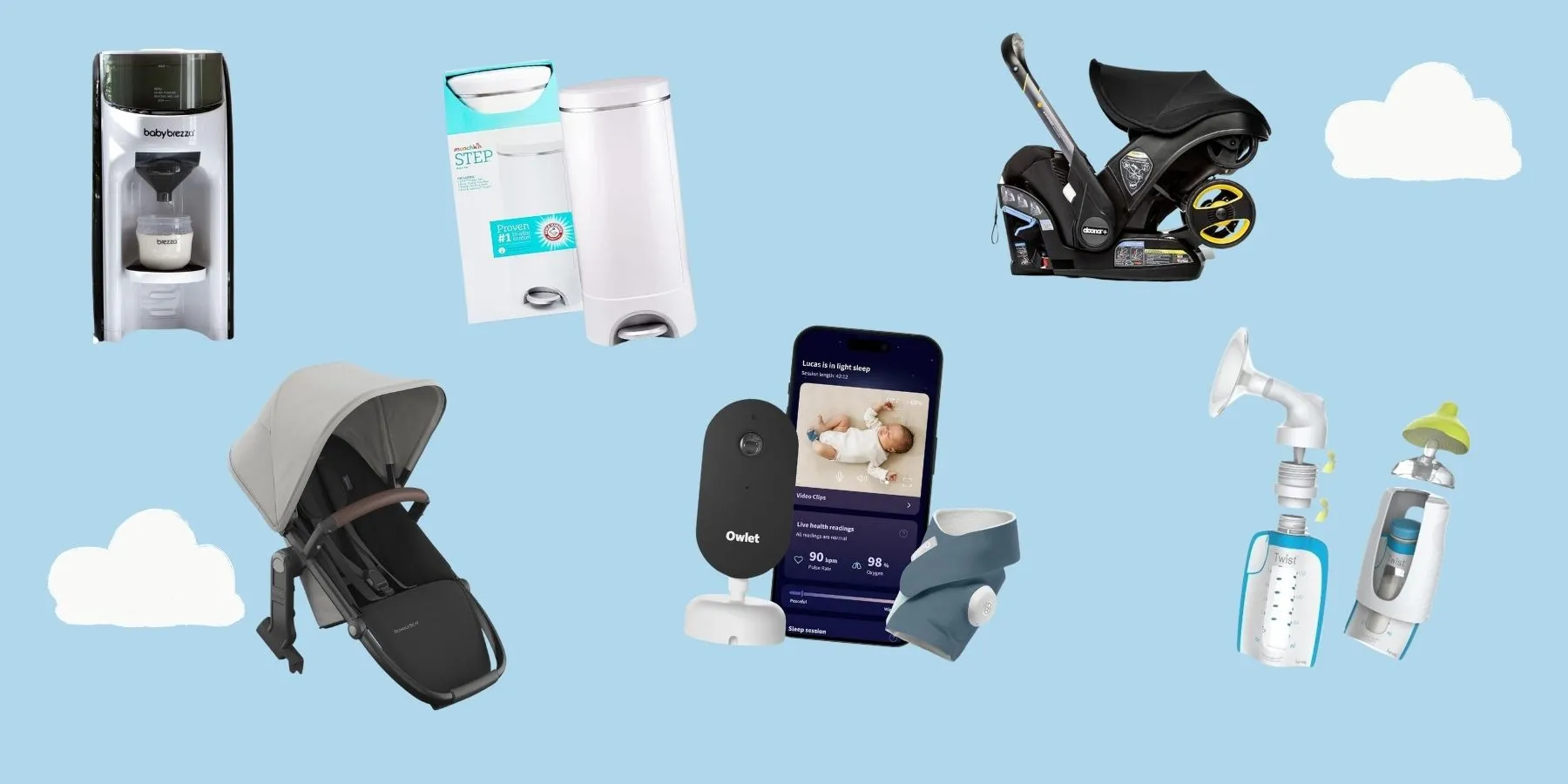
- 14 Must-Have Baby Products & Gear for 2026 (Registry-Tested)
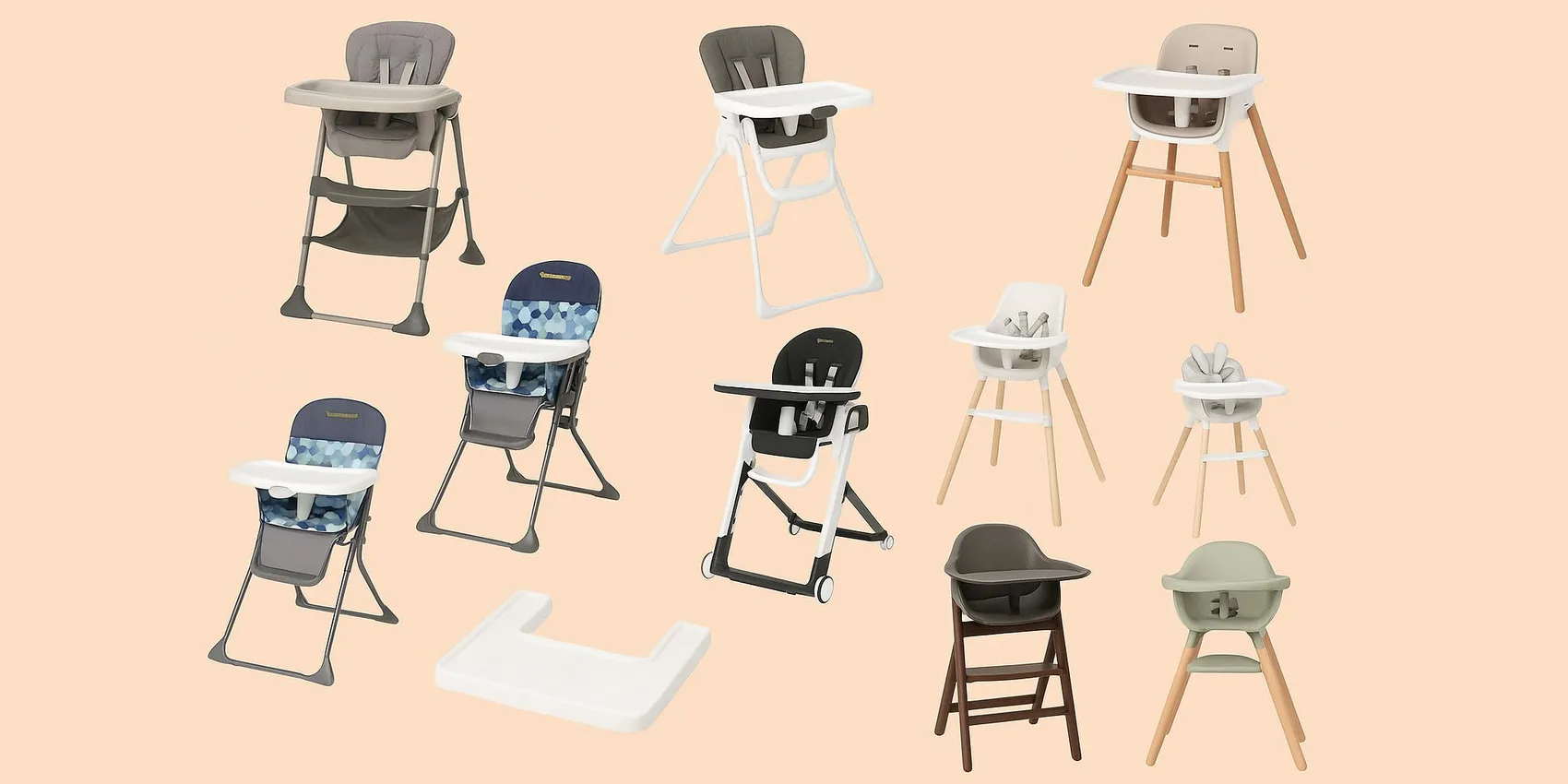
- Best Small & Compact High Chairs for Small Spaces & Apartments
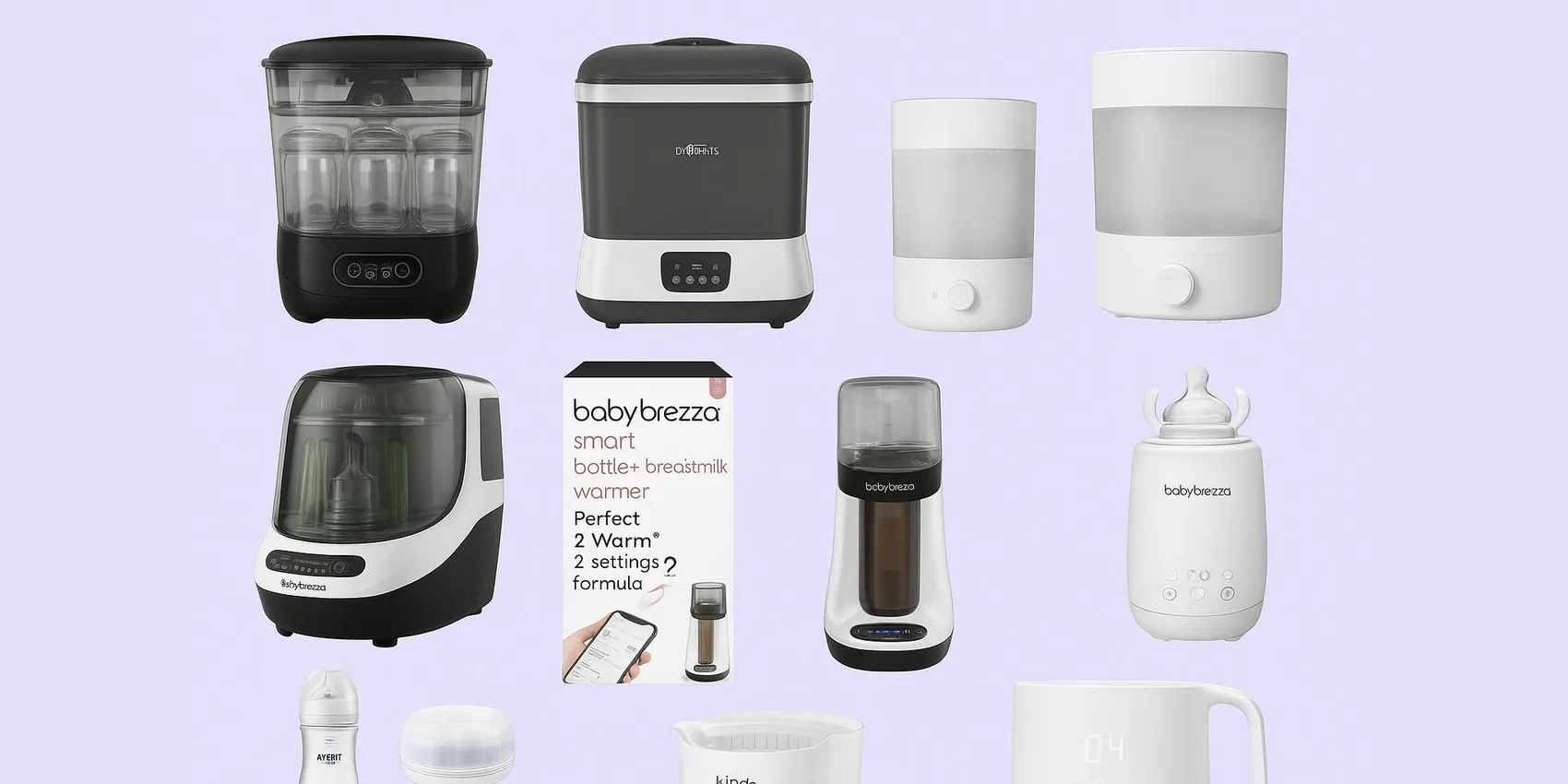
- 15 Best Baby Bottle Warmers (2026): What Actually Saves Time
- Best Teething Toys & Soothers: Silicone, Freezable & Pain-Relief Picks (2026)
- 15 Newborn Essentials Checklist 2026 (only what you'll use week 1–4)
Looking for more insights? Explore related topics: 14 Must-Have Baby Products (2026), Best Small & Compact High Chairs, 15 Best Baby Bottle Warmers (2026) or find more on our Blog.